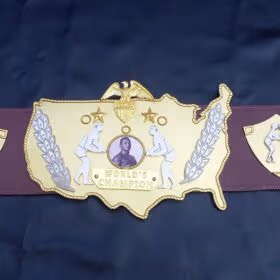
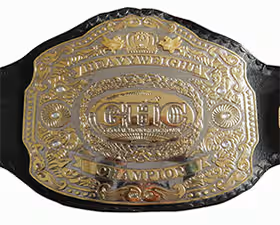
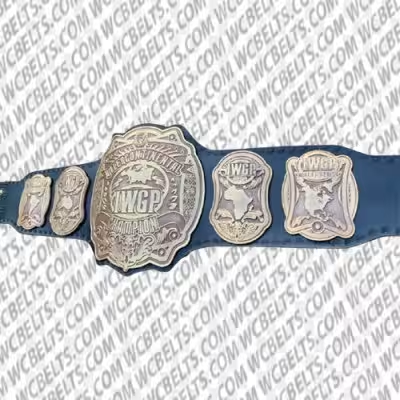
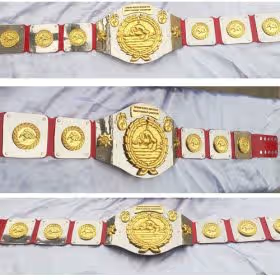
Intergender Championship Belts represent titles in professional wrestling that are designed to be contested by both men and women. These unique titles are part of the broader world of world championship belts, showcasing innovation and inclusivity in wrestling design. While these championships are relatively rare in major promotions, intergender championship belts have a significant history in independent and speciality wrestling organisations.
Key Intergender Championships
1. World Intergender Championship
Created in 2018, this title was specifically designed to be defended by wrestlers regardless of gender. The belt features a distinctive “half-and-half” design, combining blue and pink elements to symbolise inclusivity. Many collectors today prefer to customise belts inspired by intergender championship belts to reflect personal creativity and branding.
2. TNA Digital Media Championship
Introduced in 2021, this championship functioned as an intergender tertiary title. Jordynne Grace became the inaugural champion after winning a six-way match against both male and female competitors.
The title was officially retired in March 2025 and replaced by the TNA International Championship, which now stands among modern World Championship belts influenced by the concept of intergender championship belts.
3. Andy Kaufman’s Inter-Gender Championship
Andy Kaufman famously proclaimed himself the “Inter-Gender Champion of the World” during the 1980s. Although not an officially sanctioned wrestling title, replicas of his championship medal are considered valuable collectibles. Many fans choose to customise belts based on early concepts similar to intergender championship belts.
4. ROH Intergender Tag Team Championships
This short-lived championship was introduced in 2008. The belts featured a red, white, and blue strap design.
Notably, the titles were held by Chris Hero and Sara Del Rey, and today similar designs are often recreated as world championship belts inspired by intergender championship belts.
Physical Characteristics & Specifications
For collectors and fans, high-quality replica intergender championship belts typically include the following features:
- Materials: 2mm to 4mm thick brass or alloy plates mounted on genuine cowhide leather straps
- Dimensions: Approximately 50 inches in length, fitting waist sizes up to 46 inches
- Weight: Around 3 lbs (1.36 kg) for a standard replica belt
These specifications are commonly used when manufacturers customise belts based on intergender championship belts’ standards.
Historical Significance
Chyna
Although she did not hold an official intergender championship, Chyna made history with her reigns as a major mid-card champion. Her legacy helped pave the way for the acceptance of intergender championship belts and continues to influence modern world championship belt designs.
Tessa Blanchard
In 2020, she made history by defeating Sami Callihan to win a world heavyweight championship, becoming the first woman to hold such a title in a major wrestling promotion. This milestone strengthened the credibility of intergender championship belts within the industry.
Lucha Underground
This promotion was well known for regularly featuring intergender competition. Sexy Star won its top championship in 2016, further highlighting the acceptance of intergender championship belts. These innovations, along with influences from styles like Agasi martial arts, have inspired fans and creators to customise belts that represent equality and modern wrestling evolution.
Conclusion
Intergender championship belts represent an important and evolving aspect of professional wrestling. As part of the wider category of world championship belts, they highlight inclusivity, creativity, and progress within the industry. Whether for collectors or fans looking to customise belts, intergender championship belts continue to inspire new designs and storytelling possibilities in wrestling.


Reviews
There are no reviews yet.